Plant field guide / Pot marigold
Pot marigold
Calendula officinalis
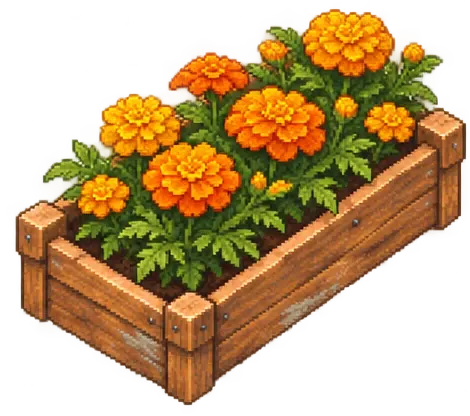
Look for these seeds on Meadow trail expeditions. The trail opens at gardener level 1. Look for its field marks: Layered orange petals form a dense, sunny disk. Its picture appears among your identification answers from gardener level 2 or after your first discovery.
- Preferred soil
- Loam
- Light
- Sun
- Ideal moisture
- 50%
- Ideal growth time
- 6 hours

Meadow trail
Sunny grassland dotted with familiar wildflowers. Level 1.
Read the meadow trail guideGrowing pot marigold
Fill a planter with loam soil and sow one seed. Set light to sun and use the watering tool when moisture falls below the plant’s preferred range. Check for pests and protect the bed when the forecast calls for extreme weather.
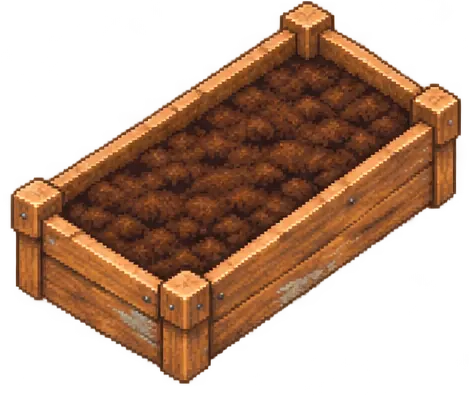 Sown
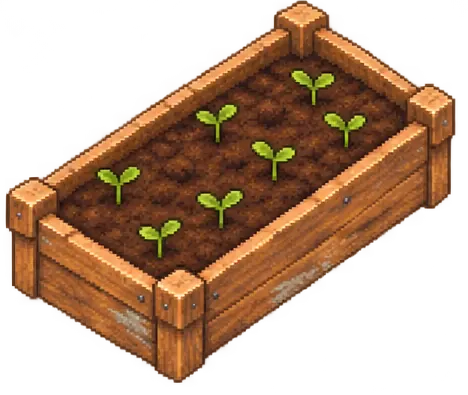 Seedling
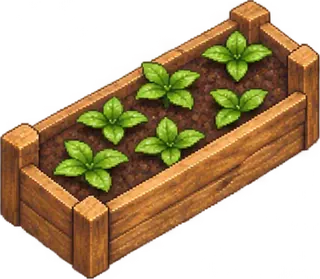 Leafing out
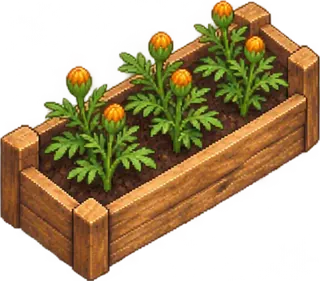 Budding
- Mature
Growth continues in real time between visits. At full maturity, a plant with at least 80% health yields two seeds when collected. Other living mature plants yield one. Collecting seeds frees that planting spot.
Companion plant. Marigolds halve the chance of insects in this clearing. Read about companion planting
Instead of collecting seeds, you can pick its blooms. The plant keeps growing and flowers again after about 1.8 hours. Deliver pot marigold blooms to flower orders for coins, XP and variety seeds. Read the blooms guide
Pot marigold in the wild
- Plant type
- Annual
- Native to
- Southern Europe; grown in gardens for centuries
- Wild habitat
- Gardens, vegetable plots and waste ground where it self-seeds
- Season
- June to the first frosts
How to recognise it
Bright orange or yellow daisy-like heads sit on sticky, aromatic stems with soft, spoon-shaped leaves. The seeds are curled, ridged crescents. It isn’t the French or African marigold, which belong to a different genus, Tagetes.
Growing it for real
Sow it straight into the ground in spring, in sun and any well-drained soil. Pick the flowers often and it keeps blooming until frost.
Did you know?
Its petals are edible and were once used to colour butter and cheese, earning it the name poor man’s saffron. Gardeners plant it among vegetables because its flowers draw hoverflies, whose larvae eat aphids. That’s the real-world root of its companion role in Little Acre.