Plant field guide / Broadleaf cattail
Broadleaf cattail
Typha latifolia
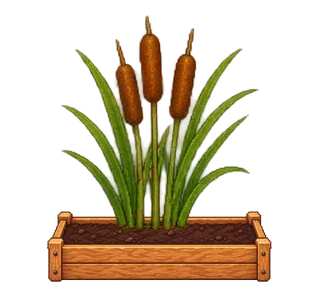
Look for these seeds on Reedwater fen expeditions. The trail opens at gardener level 8 with 12 hours of fieldwork. Look for its field marks: A brown cylindrical spike stands among tall strap-like leaves. Its picture appears among your identification answers from gardener level 9 or after your first discovery.
- Fieldwork to find
- 14 hours
- Preferred soil
- Humus
- Light
- Sun
- Ideal moisture
- 90%
- Ideal growth time
- 6 hours
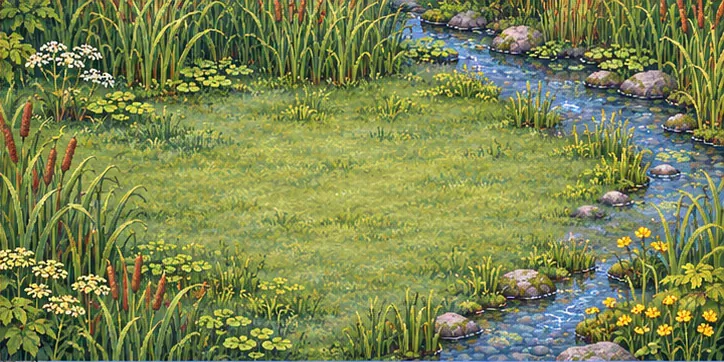
Reedwater fen
Step between sedge hummocks and pools to find flowers that thrive with wet roots. Level 8 · 12h fieldwork.
Read the reedwater fen guideGrowing broadleaf cattail
Fill a planter with humus soil and sow one seed. Set light to sun and use the watering tool when moisture falls below the plant’s preferred range. Check for pests and protect the bed when the forecast calls for extreme weather.
 Sown
 Seedling
 Leafing out
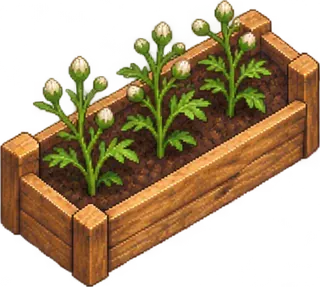 Budding
- Mature
Growth continues in real time between visits. At full maturity, a plant with at least 80% health yields two seeds when collected. Other living mature plants yield one. Collecting seeds frees that planting spot.
Instead of collecting seeds, you can pick its blooms. The plant keeps growing and flowers again after about 1.8 hours. Deliver broadleaf cattail blooms to flower orders for coins, XP and variety seeds. Read the blooms guide
Broadleaf cattail in the wild
- Plant type
- Perennial
- Native to
- North America, Europe, Asia and Africa
- Wild habitat
- Ponds, marshes, ditches and lake edges
- Season
- Flowers June to July; seed heads through winter
How to recognise it
Tall, flat, strap-like leaves surround a stem topped by a velvety brown cylinder of female flowers. A thinner spike of male flowers sits directly above it and withers after shedding pollen.
Growing it for real
Only grow it in large ponds or wetlands, because it spreads fast by its roots. Small ponds suit the dwarf cattail, Typha minima.
Did you know?
One seed head can hold hundreds of thousands of fluffy seeds. In Britain it’s often called bulrush, though true bulrushes are a different plant.